

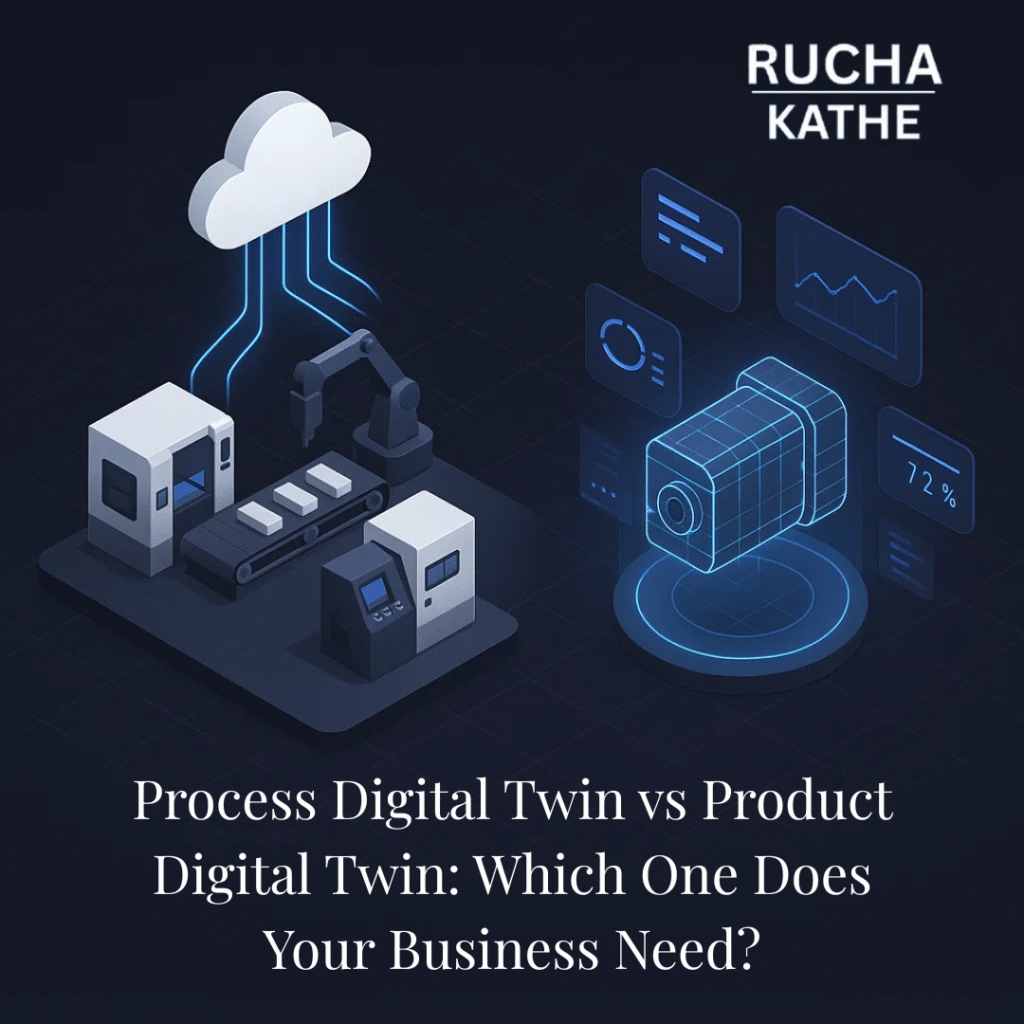
Process Digital Twin vs Product Digital Twin: Which One Does Your Business Need?
Imagine you could see the invisible—watch your product or your entire process in a virtual world, predict problems before they happen, and optimize performance in real time. Welcome to the world of digital twins. But here’s the catch: not all digital twins are created equal. Two major types—Product Digital Twins and Process Digital Twins—serve different purposes. Choosing the right one can be the difference between innovation that accelerates your business and wasted investment. What Exactly Is a Digital Twin? A digital twin is a virtual replica of a physical entity—a product, a machine, or a whole process. It mirrors real-world behavior by collecting live data, running simulations, and providing actionable insights. Think of it as a “live model” that evolves alongside its real-world counterpart. Product Digital Twin: Perfecting the Product A Product Digital Twin is all about the product itself. It mirrors the design, performance, and operation of a product throughout its lifecycle. How It Works: Collects data from sensors embedded in the product. Simulates performance under different conditions. Predicts potential failures before they occur. Helps engineers optimize designs for efficiency and safety. Real-World Example: Consider a jet engine. With a product digital twin, engineers can monitor real-time performance, detect anomalies, and even run simulations to improve fuel efficiency. The result? Safer, more reliable engines and reduced maintenance costs. Visual suggestion: An infographic showing a jet engine with a digital overlay representing sensor data and performance metrics. Process Digital Twin: Optimizing the Workflow If product twins focus on what you make, process twins focus on how you make it. A Process Digital Twin models an entire workflow or production process. How It Works: Simulates every step of a process. Identifies bottlenecks and inefficiencies. Tests changes virtually before implementing them in real life. Helps managers optimize resources, timing, and output quality. Real-World Example: In a car manufacturing plant, a process digital twin can simulate the entire assembly line. It might reveal that adding an extra robot arm or rearranging stations could reduce production time by 15%. Visual suggestion: A flowchart of a production line with color-coded indicators highlighting bottlenecks and optimized paths. Product vs Process Digital Twin: Side-by-Side Feature Product Digital Twin Process Digital Twin Focus Individual product Entire workflow or processGoal Improve product performance Enhance process efficiencyData Sources Product sensors Workflow systems, operational dataUse Cases Predictive maintenance, design tweaks Bottleneck reduction, resource optimizationLifecycle Product lifecycle Process lifecycle (may span multiple products) Why Your Business Might Need Both Here’s the insight many businesses miss: a product twin optimizes the product, a process twin optimizes the workflow. Together, they form a feedback loop of continuous improvement. For example: A product twin identifies design inefficiencies in a machine. A process twin suggests changes in the manufacturing line to reduce assembly time. Combined, they save costs, boost quality, and accelerate innovation. Digital twins are no longer futuristic—they are essential tools for modern businesses. Whether you choose a product twin, a process twin, or both, the key is understanding what problem you are trying to solve: performance or process efficiency? The companies that master both aren’t just reacting—they’re predicting, optimizing, and staying ahead of the curve. Visual suggestion: A combined illustration showing a product digital twin inside a process digital twin, highlighting synergy. Stay tuned for more insights and explore our other blogs to keep your business ahead of the curve!
Process Digital Twin vs Product Digital Twin: Which One Does Your Business Need? Read More »